
All Categories


Account

Cart
Continue Shopping
Where Should Niacinamide Be in Your Winter Skincare Routine?
In winter, skincare routines require a different balance compared to summer. Cold weather, wind, and low humidity cause the skin to lose its natural moisture faster, weakening its barrier structure and increasing sensitivity. During this period, the active ingredients you use need to both support your skin and repair the barrier.
Niacinamide, a derivative of vitamin B3, stands out in winter skincare routines precisely because of this. It supports the skin's moisture retention capacity while also helping it gain a more resistant structure against external factors.
What is Niacinamide?
Niacinamide is a water-soluble active ingredient belonging to the vitamin B3 family, known for its versatile effects in skincare. Its easy tolerance by the skin and its adaptability to different skin types make it a top choice among year-round ingredients. It stands out as a powerful yet gentle ingredient, especially during periods of high sensitivity risk.
In skincare, niacinamide offers numerous benefits, including supporting barrier function, maintaining moisture balance, reducing the appearance of uneven skin tone, and contributing to sebum balance. Because it addresses multiple needs simultaneously, a single product helps support the overall health of your skin.
How Does Cold Weather Affect the Skin Barrier?
Cold weather conditions directly affect the barrier structure, weakening both the skin's moisture retention capacity and its protective function. Sudden temperature changes and low humidity, in particular, create a breeding ground for microscopic cracks on the skin's surface.
The effects of cold weather on your skin barrier are as follows:
Cold and dry weather causes your skin to dry out more quickly.
Natural fatty acids and ceramides that protect the skin weaken. As the barrier weakens, the skin reacts more quickly to external factors. Redness and burning sensations may occur.
Skin that loses moisture loses its elasticity.
Skin with barrier damage becomes more sensitive to strong ingredients.
In winter skincare, in addition to moisturizing, you need to support your skin with ingredients that strengthen the skin barrier. Niacinamide, with its barrier-supporting properties, is among the ingredients that directly address this need.
When Should Niacinamide Be Used in Your Winter Skincare Routine?
The basic rule is to apply products containing niacinamide to cleansed, toned skin before moisturizer. Applying it before moisturizer allows the active ingredient to directly contact your skin, allowing you to feel the barrier-strengthening effect of niacinamide more intensely. The moisturizer you use afterwards helps lock in the moisture balance supported by niacinamide. One of the biggest advantages of niacinamide is that it can be used in both morning and evening routines. However, since your skin's needs can change at different times of the day during winter, you can adjust the timing of use accordingly.
In your morning routine, niacinamide helps prepare your skin for the cold weather and environmental factors it will encounter throughout the day. Thanks to its barrier-supporting effect, it helps prevent moisture loss that may occur in your skin during the day. When applied with a moisturizer and sunscreen, it helps your skin stay more comfortable throughout the day.
In the evening routine, it helps repair your skin barrier, which is damaged during the day. Especially when applied with nourishing products used in your nighttime skincare routine, you can support your skin's self-renewal process.
How Should Niacinamide Be Used on Dry Skin?
During winter months, dry and sensitive skin especially needs to find the right balance when using niacinamide. Although niacinamide is generally well-tolerated, a weakened skin barrier can increase the risk of sensitivity in some skin types. If you have dry and sensitive skin, you can use niacinamide-containing products in lower concentrations within moisturizing-heavy routines. After applying the product, you should definitely support it with a cream that soothes your skin and retains moisture. Using it with a moisturizer helps prevent any potential feeling of tightness on the skin.
Furthermore, using niacinamide in conjunction with overly harsh cleansers or intense exfoliating treatments during winter months can overtax the skin. For this skin type, the goal is not to maximize the effects of the active ingredients, but rather to keep the skin calm and balanced. Niacinamide becomes an effective aid in achieving balance when used in the right form and with the necessary frequency.
Which Active Ingredients Can Niacinamide Be Used With in a Winter Routine?
Thanks to its versatile nature, niacinamide is one of the rare ingredients that can work in harmony with different active ingredients in winter skincare routines. It provides much more balanced results when used with ingredients that support the skin barrier and help lock in moisture.
For example, niacin in simple and focused formulations...
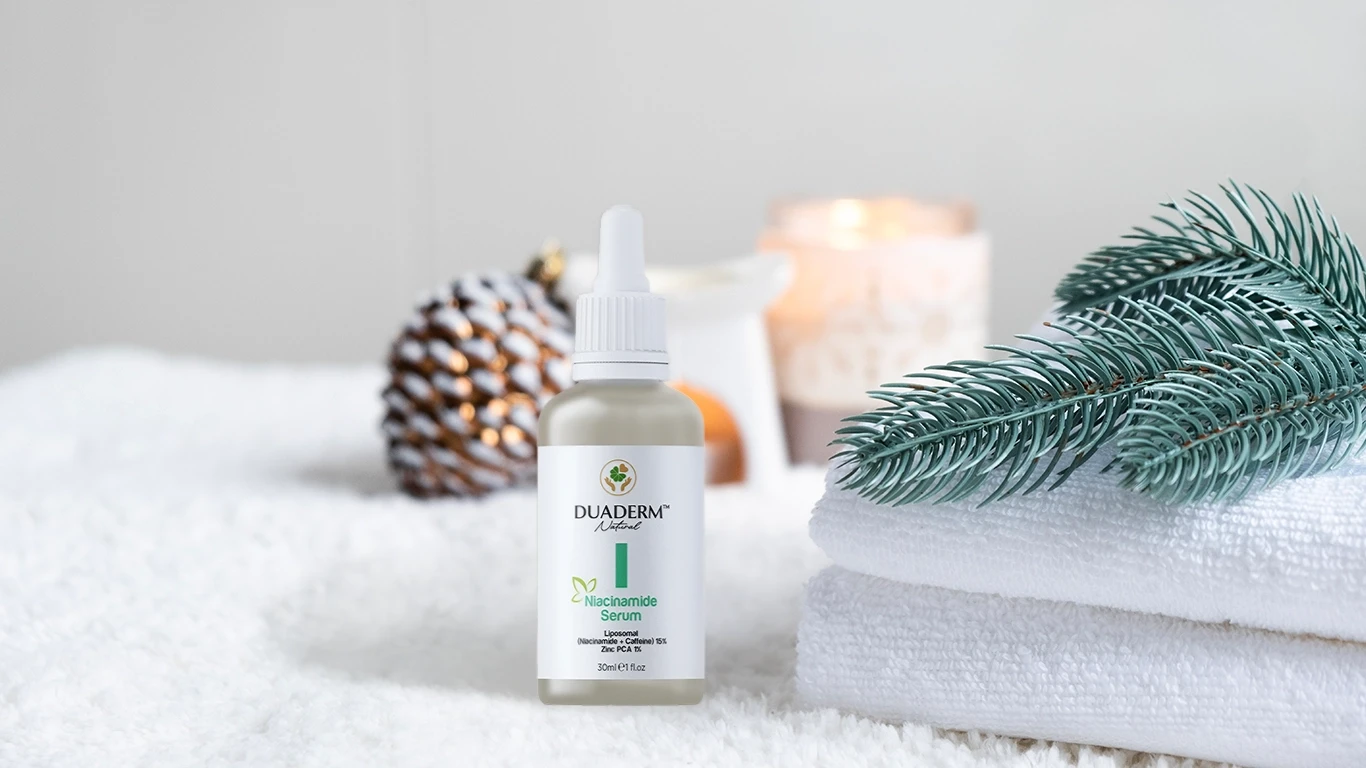
Niacinamide serum, by taking center stage in the routine, can complement the effects of other active ingredients. DUADERM Natural niacinamide skincare serum is among the options that can be easily adapted to a winter routine and is suitable for layering. The combination of niacinamide and caffeine (15%) in its formula offers a synergy to support skin balance. Zinc PCA (1%) stands out as an ingredient that helps maintain sebum balance.
The main active ingredients that can be used with niacinamide in a winter routine are as follows:
Hyaluronic acid: Helps balance the increased moisture loss in winter months. When used with niacinamide, it supports both the skin's moisture retention capacity and barrier strength.
Ceramides: Ceramides, the building blocks of the skin barrier, complement the barrier-strengthening effect of niacinamide. It creates a powerful combination, especially for dry, sensitive skin.
Panthenol (Vitamin B5): Known for its soothing and repairing effects on the skin. When used in combination with niacinamide, it provides comfortable care for skin that has become sensitive due to cold weather.
Squalane: Thanks to its skin-compatible structure, it prevents moisture loss and softens the skin.
The goal of a winter skincare routine should be to keep the skin as calm as possible while supporting its barrier function. Therefore, combining niacinamide with powerful yet gentle ingredients offers a balanced approach in terms of both short-term comfort and long-term skin health. Creating the right routine, considering your skin's needs, will help you get through the winter months with more comfortable and healthy skin.
If you value the ethical approach of the formula as much as the active ingredients in your skincare, DUADERM Natural's vegan products help you create a conscious skincare routine. By supporting your skin with products developed without animal testing, you can make a choice that is sensitive to nature and living beings.